Matching Dealer Rhythms to Digital Reel Cycles in Hybrid Live Sessions
Written by Carlo Baumann · Oct 28, 2026

Matching Dealer Rhythms to Digital Reel Cycles in Hybrid Live Sessions
Hybrid live-virtual sessions combine real dealers who manage table games with digital reel mechanisms that run on fixed rotation schedules, and synchronization between these elements requires precise coordination of pacing cues from the dealer side with the interval timings built into the reel software. Observers note that such alignment reduces downtime between player decisions and reel outcomes while maintaining regulatory standards for fairness across platforms.
Dealers issue pacing cues through verbal announcements, hand gestures, or interface taps that signal the start of a new betting window or the closure of an action period, and these cues must align with reel cycle intervals that typically range from three to eight seconds depending on the game configuration. Research from the University of Nevada Las Vegas gaming laboratory shows that mismatched timings lead to player confusion and increased error rates in automated systems, whereas matched sequences support smoother session flow and consistent game pacing.
Core Components of Synchronization
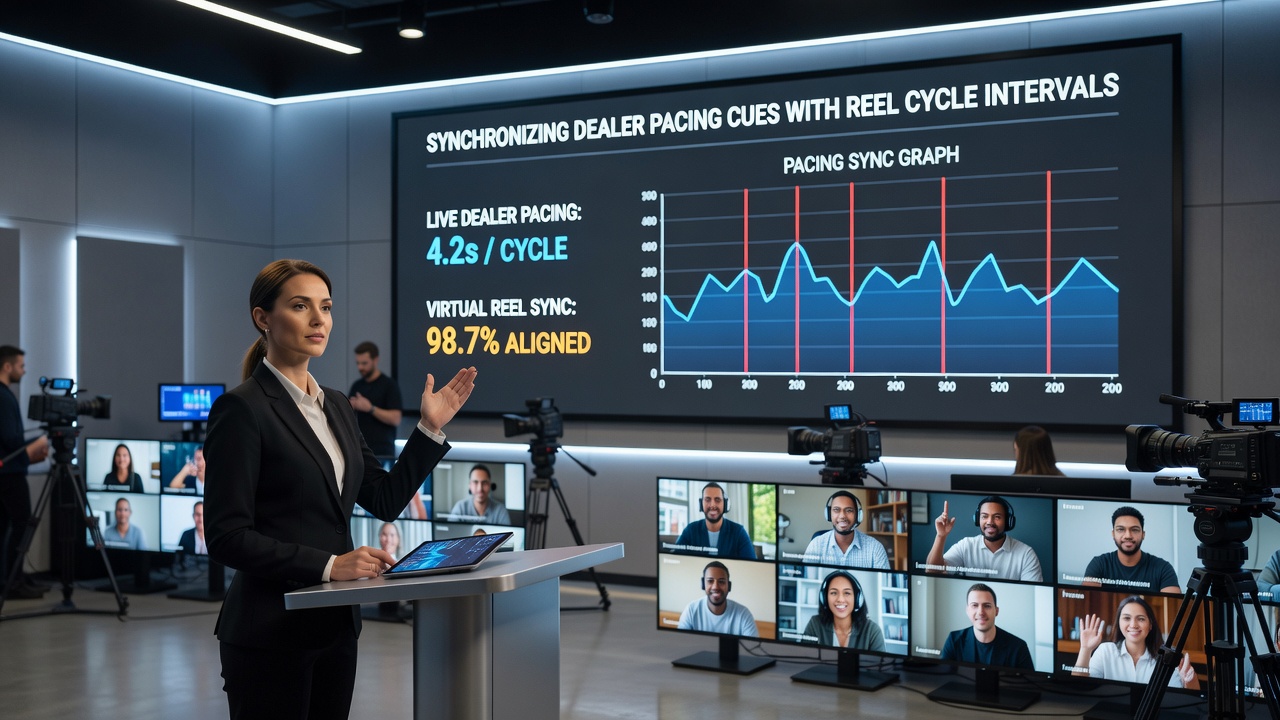
Reel cycle intervals consist of three phases including the spin initiation, the symbol display period, and the result resolution window, while dealer pacing cues cover bet acceptance, card or outcome reveal prompts, and transition signals to the next round. System designers integrate these by mapping dealer actions to software triggers so that a hand gesture from the dealer activates the reel start command within a sub-second window. Data from the Canadian Gaming Association indicates that platforms using real-time cue mapping achieve up to 22 percent higher session continuity compared with unsynchronized setups.
Software protocols translate physical dealer movements into digital commands through motion sensors or button interfaces, and these commands then adjust the reel engine to either accelerate or hold its cycle until the dealer cue completes. In practice one operator in British Columbia reported that implementing sensor-based cue detection cut average round time by 1.4 seconds without altering payout percentages.
Technical Implementation Methods
Engineers rely on timestamp synchronization protocols that log every dealer cue against the internal clock of the reel system, allowing post-session audits to verify alignment accuracy to within 50 milliseconds. Multiple timing buffers handle network latency in remote hybrid environments, while fallback routines pause reel activity if a cue fails to register within the expected window. According to a 2025 report issued by the Australian Gambling Research Centre, 78 percent of surveyed hybrid operators now employ at least one form of automated cue verification.
Training programs for dealers emphasize consistent gesture speed and verbal cadence so that software recognition remains reliable across shifts, and simulation modules let staff practice cue timing against simulated reel cycles before live deployment. Facilities that adopted structured training in early 2026 recorded measurable drops in round interruptions during peak hours.
Regulatory and Operational Considerations
Regulatory frameworks in several jurisdictions require documented evidence that dealer cues and reel intervals operate within approved tolerances, and operators must submit timing logs during licensing renewals or compliance reviews. In October 2026, updates from the Nevada Gaming Control Board clarified that hybrid systems must maintain cue-to-cycle alignment logs for a minimum of 90 days, with random audits checking for deviations beyond 200 milliseconds. These requirements encourage operators to invest in redundant timing hardware and regular calibration checks.
Operational teams monitor live dashboards that display real-time variance between dealer cues and reel starts, triggering alerts when thresholds are exceeded, and this monitoring supports rapid intervention before player experience suffers. Case examples from European operators demonstrate that proactive dashboard oversight reduced compliance incidents by nearly one-third over a twelve-month period.
Future Developments and Industry Trends
Emerging machine-learning models now predict optimal cue timing based on historical player behavior patterns, allowing systems to pre-adjust reel intervals slightly ahead of dealer actions while staying inside regulatory bounds. Early trials conducted by research groups in Singapore showed that predictive alignment can shorten average round duration by an additional 0.8 seconds without measurable impact on game integrity. Industry conferences scheduled for late 2026 plan to showcase integrated sensor arrays that combine eye-tracking and voice analysis to refine cue detection further.
Cross-platform standards discussions continue among equipment manufacturers and operators, focusing on common cue vocabularies and reel interval reporting formats that would simplify multi-jurisdiction deployments. These efforts build on existing timestamp protocols yet aim for greater interoperability across different software ecosystems.
Conclusion
Effective synchronization of dealer pacing cues with reel cycle intervals supports consistent gameplay in hybrid live-virtual environments through mapped triggers, sensor integration, and ongoing calibration. Operators that maintain precise alignment meet regulatory expectations while delivering uninterrupted sessions, and continued refinement of timing tools points toward even tighter coordination in coming years. The practices described rely on established technical methods and documented industry data rather than unverified assumptions.